Much of the character of Dacorum sits in its conservation areas, including parts of Berkhamsted, Tring, Hemel Hempstead Old Town and Kings Langley, and in the countryside of the Chilterns National Landscape around Tring, Aldbury and Ashridge. You can still extend a home in these places, but the rules are tighter and the design matters more.
What is different in a conservation area
Conservation areas and the Chilterns National Landscape (until 2023 called the Chilterns Area of Outstanding Natural Beauty) are what planning law calls protected land. On protected land, several of the usual permitted development rights are cut back.
What needs planning permission
- Side extensions of any size.
- Rear extensions of more than one storey.
- Dormers and other roof extensions, including most loft conversions that change the roof shape.
- Cladding the outside of the house in stone, timber, render, tiles or similar.
- Larger rear extensions: the prior approval route for going beyond 3 or 4 metres is not available.
What can still be permitted development
A single-storey rear extension within the standard depth limits of 3 metres for a semi or terrace and 4 metres for a detached house, and roof lights set into the existing slope, can still be permitted development, as long as no other restriction applies.
Article 4 directions
In some conservation areas the council has gone further with an Article 4 direction, which removes specific rights on particular streets. Typical examples are replacing windows and doors, altering front boundary walls, or painting brickwork. If your street has one, even small changes to the front of the house can need permission. The council's conservation area pages list where these apply.
Demolition and trees
- Demolition. Knocking down an unlisted building, or a substantial part of one, in a conservation area needs planning permission. That can include an old outbuilding or a garage.
- Trees. You must give the council six weeks' notice before cutting down or pruning most trees in a conservation area. That matters when an extension or its foundations sit near a tree.
Listed buildings
If your house is listed, listed building consent is needed for any works that affect its character as a building of special interest, inside or outside. That can include replacing windows, removing internal walls and changing historic fireplaces. Carrying out such works without consent is a criminal offence, and the requirement passes to future owners. Listing is separate from conservation area status, and some houses have both.
Getting a design approved
In a conservation area the council is asking a specific question: does the proposal preserve or enhance the character and appearance of the area? The designs that do well tend to:
- stay subordinate to the original house, lower and set back rather than competing with it;
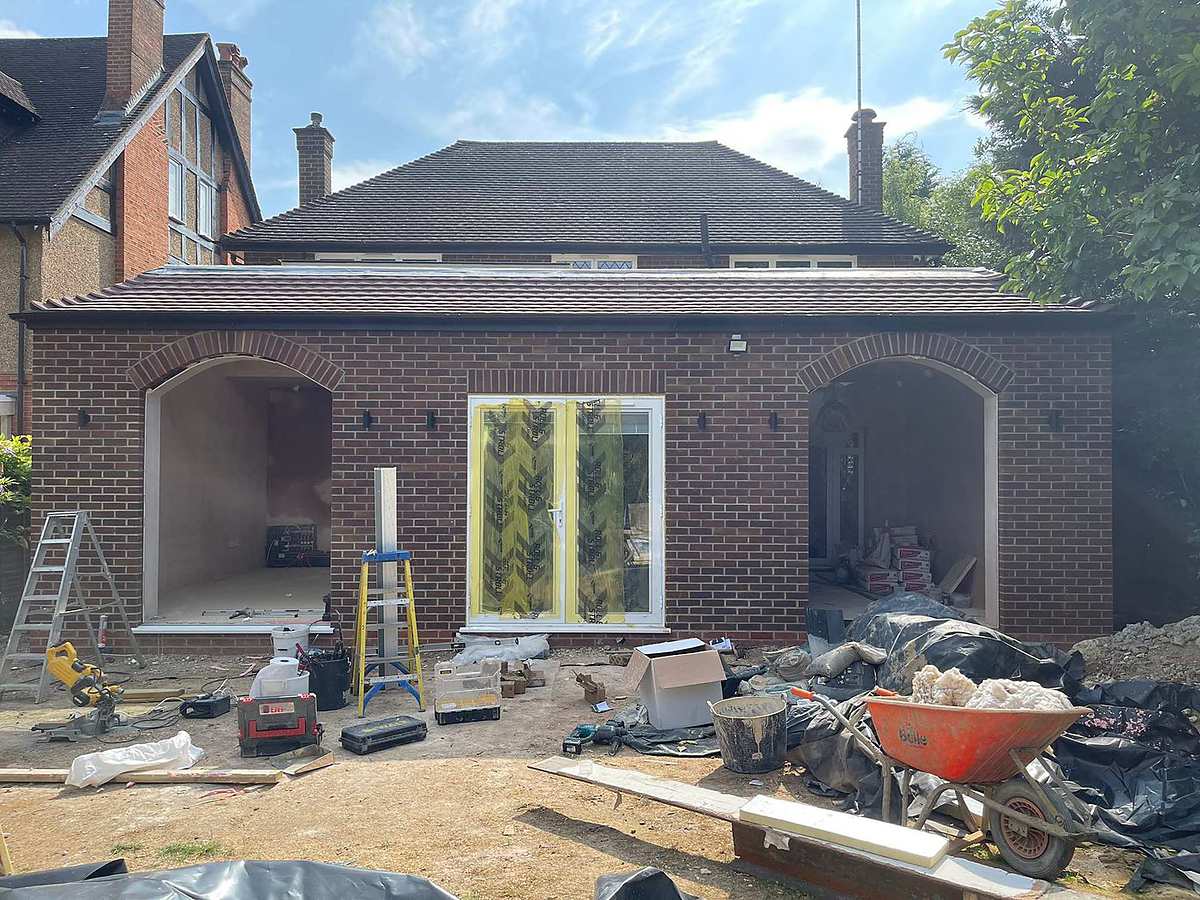
- use matching or sympathetic materials, such as brick that matches in colour, size and bond, and roof tiles or slate to suit;
- respect traditional detailing, such as window proportions, gauged brick arches and cills;
- keep changes at the back, where they are less visible from the street;
- come with a clear heritage statement explaining how the design responds to the area.
Contemporary designs can succeed too, particularly glazed rear extensions that clearly read as new, but they need careful drawing and justification.
Workmanship matters more
A conservation area extension is judged on the finished result as much as on the drawings. Matching brick, lime mortar where the house uses it, properly built arches and well-detailed lead work are what make an addition look as if it belongs. It is slower work, and worth it.
How to find out where you stand
- Check Dacorum Borough Council's planning map and conservation area pages for your address.
- Look up the planning history of your house for any conditions or Article 4 directions.
- Check the National Heritage List for England to see whether the house is listed.
We do all of this on the first visit, and tell you plainly whether your plans need an application. See how we refurbished a Victorian house in Berkhamsted, or read about our renovations and extensions.
Common questions
Can I build a rear extension in a conservation area without planning permission?
Sometimes. A single-storey rear extension within the standard 3 or 4 metre depth limits can still be permitted development, unless an Article 4 direction or a planning condition has removed that right. Side extensions, two-storey rear extensions and dormers all need planning permission in a conservation area.
How do I find out if my house is in a conservation area?
Dacorum Borough Council publishes its conservation area boundaries and appraisals, and its planning map shows them by address. We check this for every job on the first visit.
Do I need permission to cut back a tree in a conservation area?
You must give the council six weeks' written notice before cutting down or pruning most trees in a conservation area, broadly any with a trunk wider than 7.5 centimetres measured 1.5 metres above the ground.
Is a listed building the same as a conservation area?
No. A conservation area protects the character of an area. Listing protects an individual building, inside and out, and needs listed building consent for any works that affect its character, even internal ones.
General guidance for homeowners in England, written in September 2026. Rules, fees and prices change, and every house is different, so we confirm everything for your property on the free site visit.